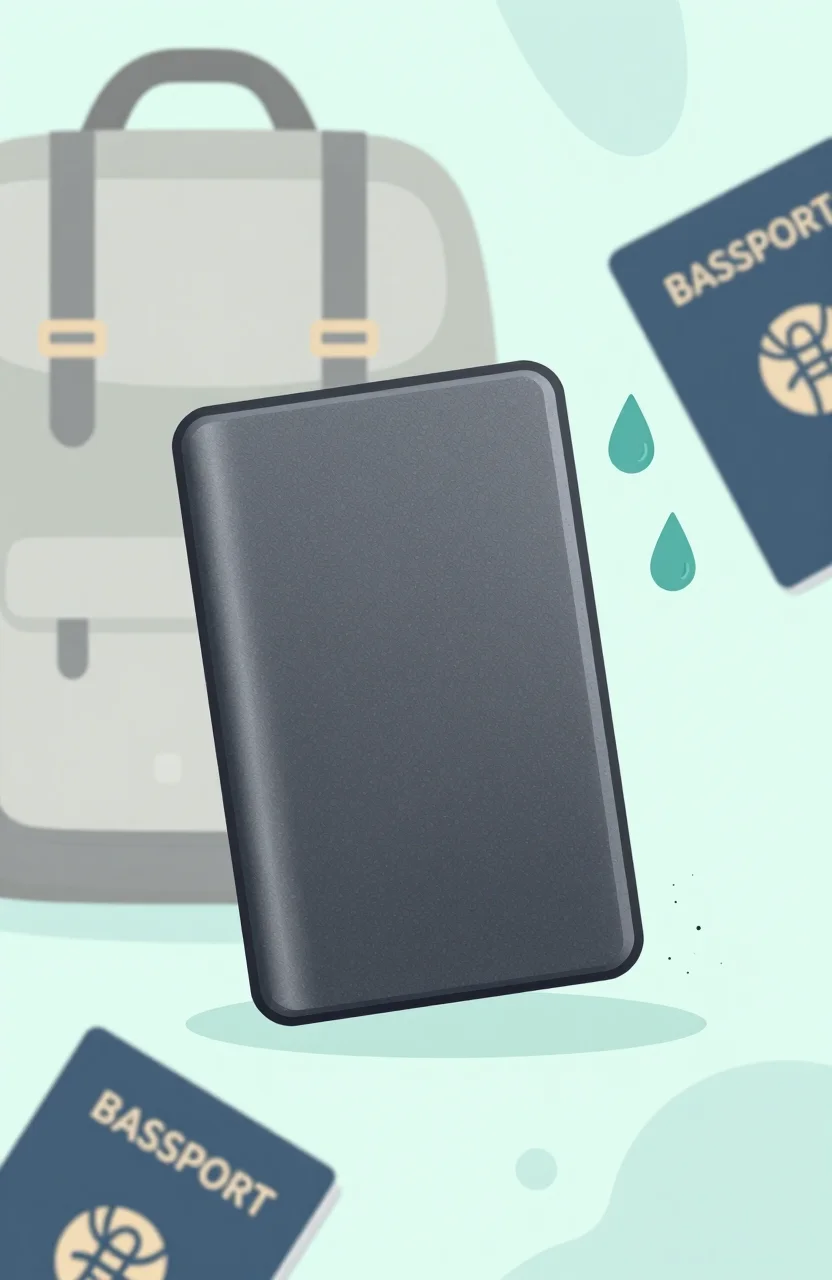
Not every portable SSD is built for the road. The thin metal slabs that look great on a desk can crack, corrode, or fail the moment travel gets rough - a bag tossed on an overhead bin, rain on a mountain trail, or sand from a beach shoot. If your data matters, the drive you carry should be able to take a hit.
This guide covers the best rugged portable SSDs for travel in 2026, with real specs on dust and water resistance, drop ratings, and practical advice on when ruggedness actually matters.
IP Ratings and Drop Specs - What the Numbers Actually Mean
Manufacturers use official ratings to back up their ruggedness claims. Here is what to look for:
- IP65: The first digit (6) means fully dust-tight. The second digit (5) means protected against low-pressure water jets from any direction - solid for rain, splashes, and dusty trails. It is not submersion-rated; for that you need IP67 (30 minutes at 1 meter) or IP68.
- Drop rating: Advertised as a height in meters. A 3m drop rating gives more real-world confidence than a 1.5m rating, since bags get dropped from unexpected heights and angles.
- Build material: Rubber bumpers and reinforced aluminum chassis absorb shock better than thin plastic. There is a weight trade-off, but for travel ruggedness, that trade is worth making.
For tips on handling, cases, and transport habits that extend drive life, our guide on how to protect your external drive from physical damage has practical advice for every situation.
Samsung T7 Shield 2TB - The Trusted Choice for Travelers
The Samsung T7 Shield 2TB is the rugged portable SSD that earns the most trust from photographers, filmmakers, and frequent travelers. It carries an IP65 dust and water resistance rating, survives drops from up to 3 meters, and wraps those credentials in a textured rubber body that actually grips in your hand.
Read speeds sit at around 1,050 MB/s via USB 3.2 Gen2 (10 Gbps) - fast enough to review footage, edit photos directly off the drive, or run a DaVinci Resolve project on a laptop. Not the fastest drive on this list, but the combination of proven ruggedness, Samsung build quality, and broad compatibility makes it the default recommendation for most travelers.
It ships with both USB-C and USB-A cables, which is genuinely useful when connecting to older laptop ports, rental cameras, or hotel room equipment that still runs USB-A. Small detail, but one that saves frustration in the field.
SanDisk Extreme PRO Portable 2TB - Rugged and Fast
The SanDisk Extreme PRO Portable 2TB raises the speed ceiling significantly: 2,000 MB/s reads and writes over USB 3.2 Gen2x2. For videographers who need to offload large card dumps quickly or edit high-bitrate footage on a laptop at the shoot location, that extra headroom is real.
It matches the T7 Shield on IP65 dust and water resistance. The aluminum and rubber build feels solid, and the rubber bumper provides meaningful drop protection - though SanDisk does not publish an official drop-height spec, unlike Samsung.
One thing worth knowing upfront: those 2,000 MB/s speeds require a USB 3.2 Gen2x2 Type-C port on your host device. Most 2024-2026 MacBook Pros and premium Windows laptops include one, but older or budget hardware likely does not. Connected to a standard Gen2 port (10 Gbps), the drive runs at roughly 1,000 MB/s - still excellent, just not the headline figure. Check your laptop's port spec before choosing this over the T7 Shield.
Samsung T9 Portable 2TB - Speed Without the IP Rating
The Samsung T9 Portable 2TB is one of the fastest portable SSDs available, matching the SanDisk PRO at 2,000 MB/s via USB 3.2 Gen2x2. The rubber grip body handles minor bumps and drops well, and Samsung's build quality is reliable.
The gap on this list: the T9 has no official IP rating. Samsung does not certify it for dust or water resistance. For urban travel, studio-to-studio transport, or work in clean environments, that is a non-issue. But for outdoor shoots, beach sessions, dusty trails, or anything involving weather, the T7 Shield or SanDisk PRO are the safer calls. Browse the full external SSD category to compare all current options side by side.
Seagate Portable 5TB HDD - High-Capacity Backup on a Budget
Not every drive in your bag needs to be your working drive. The Seagate Portable 5TB is a traditional spinning hard drive - slow at around 120-130 MB/s - but at 5TB for a fraction of the per-gigabyte cost of SSD, it earns a spot as a dedicated backup destination for long trips.
The workflow: offload cards to your primary rugged SSD each evening for working copies, then clone everything to the Seagate overnight. That simple redundancy - two physical copies on two different drives - protects against the most common failure modes: accidental deletion, drive malfunction, or theft.
Important: the Seagate Portable is not rugged. No IP rating, spinning platters that hate drops. Keep it in a padded sleeve, handle it carefully, and never use it as your main working drive on location. Think of it as your insurance policy. For a deeper look at how HDDs compare to SSDs for long-term archiving, check our guide: HDD vs SSD External Drives - Which Is Best for Long-Term Archiving?
USB 3.2 Gen2 vs Gen2x2 - Does It Matter for Travel?
Two of the drives above (SanDisk Extreme PRO and Samsung T9) use Gen2x2 (20 Gbps). The T7 Shield runs on standard Gen2 (10 Gbps). Here is the practical breakdown for travel use:
- USB 3.2 Gen2 (10 Gbps): Real-world speeds up to ~1,000 MB/s. Handles photo offloads, 4K footage transfer, and most travel workflows without issue.
- USB 3.2 Gen2x2 (20 Gbps): Real-world speeds up to ~2,000 MB/s. Makes a meaningful difference when dumping large CF Express or ProRes RAW card volumes quickly, or editing high-bitrate video directly from the drive.
If your laptop or camera only has Gen2 ports, a Gen2x2 drive gives you zero speed advantage. In that case, the T7 Shield at 1,050 MB/s is the smarter buy - and the ruggedness gap closes in its favor.
Travel Backup Rule: Never Rely on a Single Drive
No matter how rugged a drive is, relying on a single copy of your travel photos or footage is a risk not worth taking. Drives fail. Bags get stolen. An SSD can take a 3-meter drop and still suffer internal damage that does not show up until you need the files most.
- Offload memory cards to your primary rugged SSD at the end of each day.
- Copy to a second device overnight - even a slow HDD like the Seagate, or cloud storage via hotel Wi-Fi.
- Keep the backup physically separate from the main drive when possible (different bag compartments, or leave one in the hotel safe).
The rugged drives in this guide protect against physical damage. The backup strategy protects against everything else.