If you need a portable SSD that survives backpacks, job sites, and the occasional rain shower, the Samsung T7 Shield is one of the few drives that backs its toughness claims with real IP65 and drop ratings. This Samsung T7 Shield review looks at the 2TB model around $169.99, with sequential claims up to 1050 MB/s read and 1000 MB/s write over USB 3.2 Gen 2, plus what Amazon buyers actually report across more than 16000 reviews at about 4.7 stars.
You will not get Gen2x2 fireworks here. You will get a rubberized brick that stays fast enough for photo dumps, 4K footage handoff, and laptop backups without babying the enclosure. If you mainly care about raw price per gigabyte, skim our SSD price per GB guide for 2026 first, then come back when durability matters as much as the receipt.

- IP65 dust and water resistance with drop protection up to 9.8 feet
- USB 3.2 Gen 2 speeds up to 1,050 MB/s read and 1,000 MB/s write
- Works with PC, Mac, Android devices, and gaming consoles
- Rugged rubberized shell built for travel and field work
Who it's for
The T7 Shield makes the most sense when your drive leaves the desk. Field shooters who toss cards into a pack between setups, IT techs who clone machines on client floors, and travelers who keep a full OS image or Lightroom catalog on the go all fit the use case. The rubber shell and sealed ports are the point of this product, not a marketing sticker.
It is also a solid pick if your previous portable SSD cracked after one fall off a table. Samsung rates the Shield for drops from roughly 9.8 feet (about 3 meters). That will not make it invincible, but it is a real step above bare-metal pocket drives that dent when they kiss concrete.
Skip it if you only shuttle files between two desks in a climate-controlled office. The standard T7 or another thin Gen 2 stick will cost less and feel less bulky in a slim sleeve. Skip it too if you need sustained multi-gigabyte-per-second transfers into a Thunderbolt dock. This interface tops out at USB 3.2 Gen 2 (10 Gbps), so marketing peaks near 1050/1000 MB/s are the ceiling, not a soft floor you casually beat.
Gamers who want a travel library for Steam or console archive storage can use it, but read our notes on storage for gamers if your priority is load times on a desktop PCIe slot. An internal NVMe will always feel snappier for local installs.
What you get
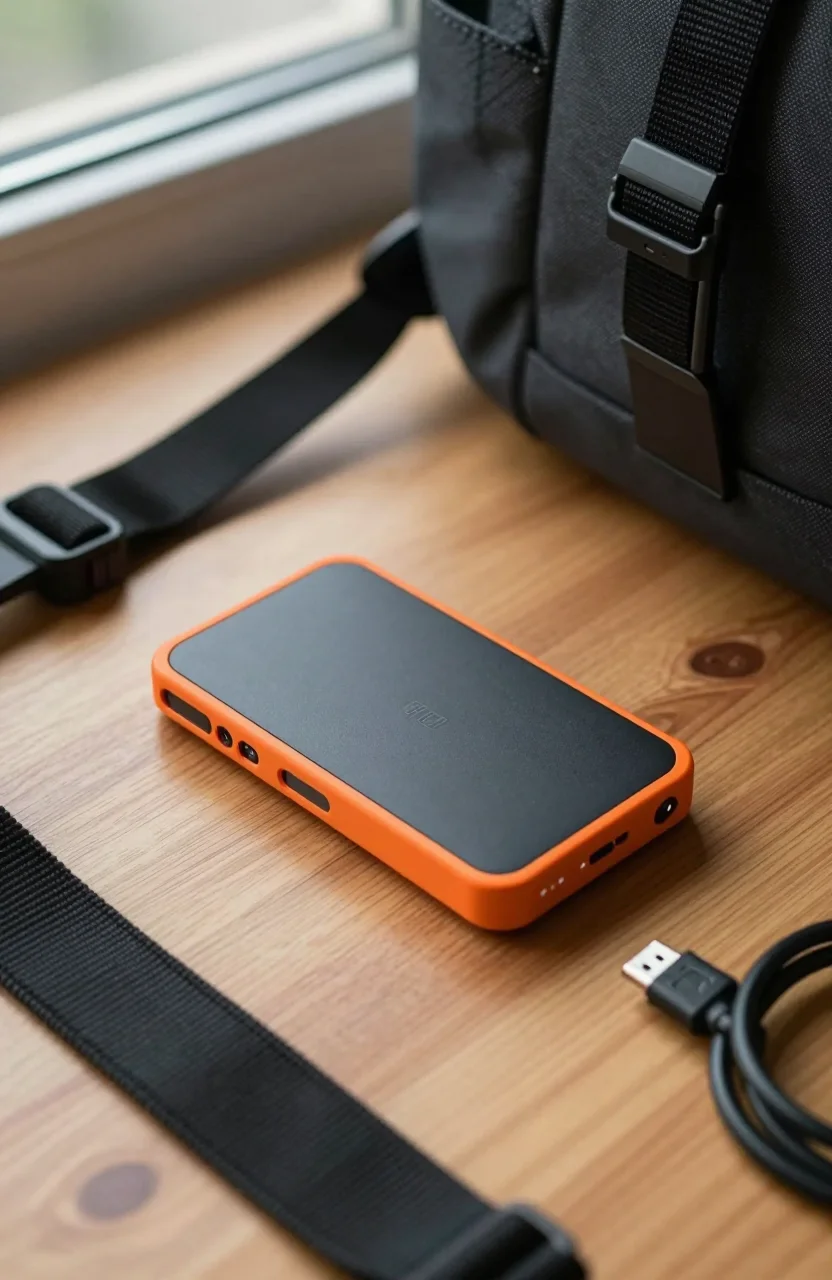
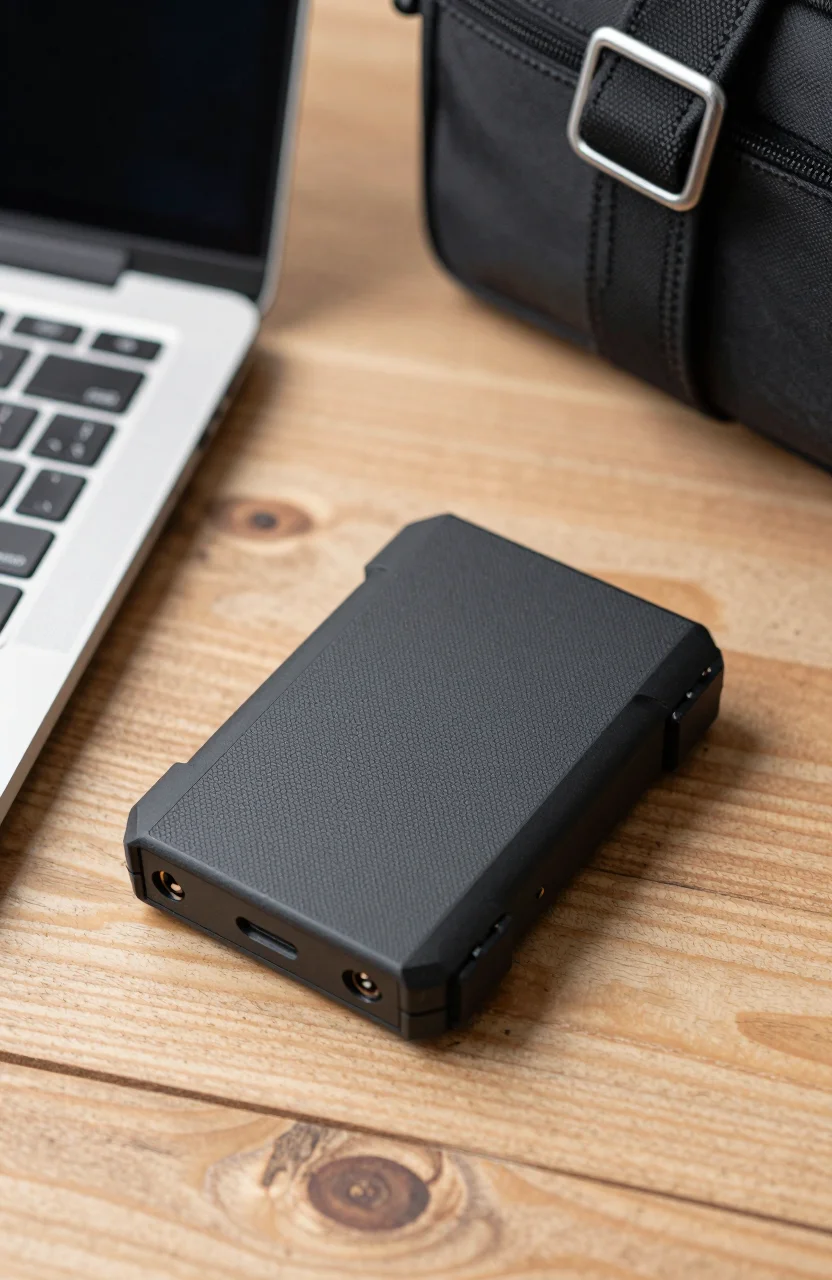
The 2TB T7 Shield ships as a compact, rubber-armored enclosure with USB-C connectivity and the usual short cables in the box (USB-C to C and often a C to A adapter depending on the kit). Capacity options typically span 1TB to 4TB; this review centers on the 2TB sweet spot because it matches how most buyers actually fill a portable drive for work folders, camera backups, and a few large projects without jumping to the premium 4TB sticker.
Samsung quotes sequential performance up to 1050 MB/s read and 1000 MB/s write. On a healthy USB 3.2 Gen 2 port you should land in that neighborhood on large sequential copies. On USB 3.0 / Gen 1 ports you will cap closer to 400-450 MB/s. Always check the port badge on your laptop before you blame the drive.
IP65 means dust-tight construction and protection against water jets from any direction. It does not mean you should rinse it under a faucet for fun or leave it submerged. Think rain, splashes, and dusty vans, not scuba kits. Password protection through Samsung Magician is available if you want a basic software lock. Hardware encryption depth and recovery behavior still deserve a careful setup: write down your password somewhere safe, because a locked drive with a forgotten code is a brick for practical purposes.
Compared with a spinning portable hard drive, the Shield is quieter, lighter in day-to-day use, and far more shock tolerant for active work. If you are still weighing spinning vs flash for archives, our HDD vs SSD external archiving guide covers when a cheap multi-terabyte HDD still wins for cold storage while the Shield handles the hot working set.
In the middle of a busy week, the practical test is simple: plug in the T7 Shield on Amazon, copy a 50GB folder of mixed RAW and video, and time it on your actual laptop port. Spec sheets do not care about your dock chipset. Your stopwatch does.
Pros
- Real rugged rating. IP65 plus a roughly 9.8 ft drop claim is more honest than vague "military grade" stickers with no IP code.
- Fast enough for daily creative work. Near 1 GB/s sequential on Gen 2 ports shortens card dumps and project handoffs.
- Proven buyer feedback. Roughly 4.7 stars across about 16383 Amazon reviews is a large sample, not a handful of early adopters.
- Comfortable 2TB capacity at about $169.99. That lands in a fair band for a branded rugged portable in 2026 when you price per usable gigabyte.
- Cross-platform habits. Format once for your workflow (exFAT for mixed Windows/Mac, APFS or NTFS when you stay in one camp) and it behaves like any modern USB SSD.
The rubberized shell also reduces the "metal slab sliding off a car seat" problem. Small things like that matter more after the third week on the road than another 50 MB/s on a benchmark chart.
Samsung's software stack is optional. You can ignore Magician entirely and treat the drive as a plain block device. That is a plus if you hate vendor utilities, and a plus if you do want password tools without hunting third-party apps.
Cons
- Not the fastest portable class anymore. Drives that push USB 3.2 Gen 2x2 near 2000 MB/s leave the Shield behind on huge sequential jobs.
- Bulkier than a slim T7. The armor adds grip and thickness. Pocket carry is possible but less elegant.
- Price premium vs non-rugged twins. You pay for IP65 and drop resistance. Desk-only users overpay for protection they never use.
- Thermal soft limits under long writes. Like most compact USB SSDs, sustained multi-hundred-gigabyte copies can warm the shell and trim peak speed. Pause between huge jobs if you notice throttling.
- Cable lottery. A weak third-party cable or a charge-only port will make a 1050 MB/s drive look broken. Use the included cable or a known data-capable USB-C lead.
None of these are deal breakers for the intended buyer. They are the trade-offs you accept when you choose toughness over peak charts. If your brief is "fastest portable money can buy," look at Gen2x2 options instead and keep a soft pouch, because those shells are usually less sealed.
Price & real-world speed
Street pricing for the 2TB Shield hovers near $169.99 depending on Amazon promotions. That is roughly $0.085 per GB before tax, which is not the cheapest flash you can buy, but it is reasonable once you bake in the enclosure, warranty brand, and ruggedization. Watch lightning deals; portable SSDs swing $10 to $30 in a quiet week.
On a true USB 3.2 Gen 2 port, expect large sequential copies in the mid-to-high hundreds of MB/s up toward the rated 1050/1000 MB/s when the drive is cool and the file set is mostly big contiguous media. Small random files (thousands of tiny documents) will look slower on any SSD. That is filesystem and USB overhead, not a Shield-specific flaw.
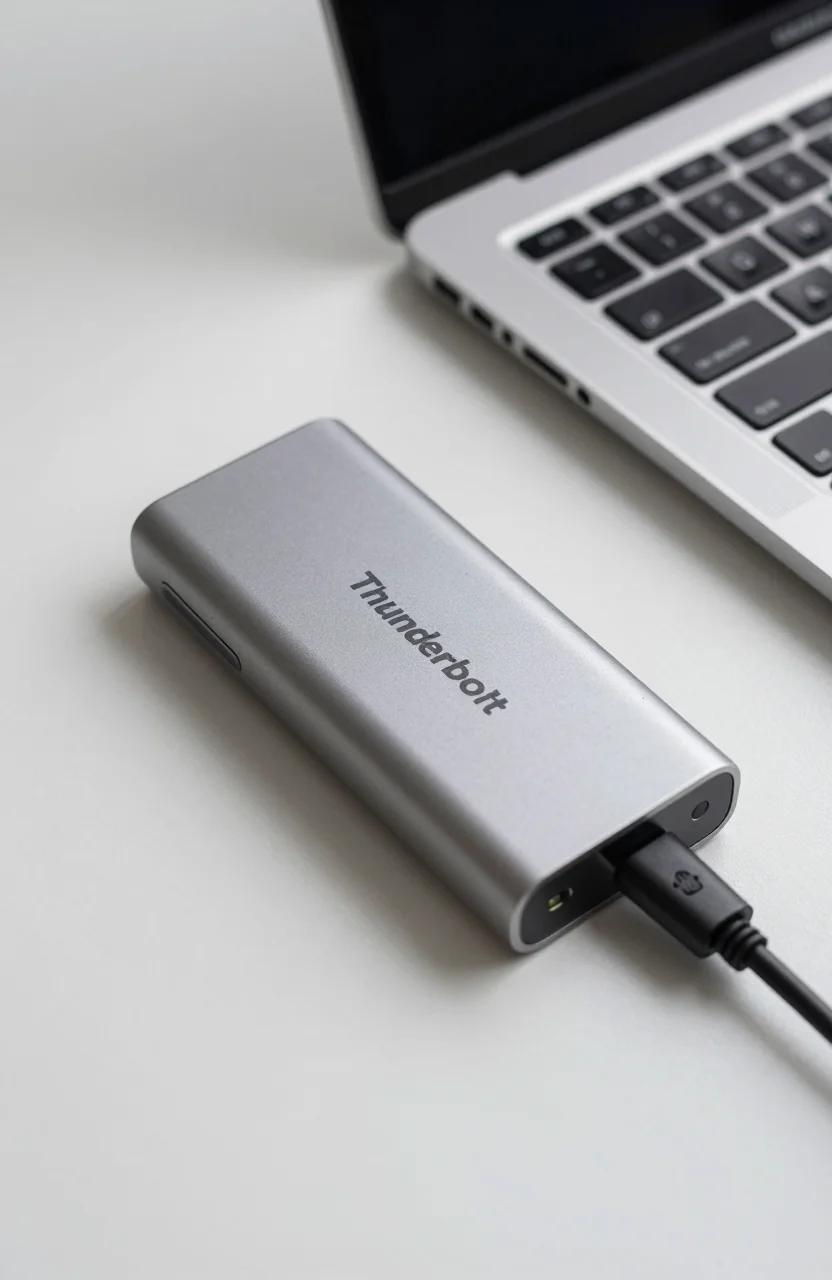
If your MacBook or Windows ultrabook only exposes USB 3.0 / 5 Gbps, plan for roughly half the headline speed. The drive is fine; the pipe is not. Thunderbolt docks sometimes expose only a USB hub behind the pretty logo, so verify link speed in the OS if numbers look wrong.
For context on how solid-state drives behave beyond portable boxes, the ultimate SSD guide walks through interfaces, endurance, and why sequential ratings never tell the whole story. Pair that mental model with a single timed copy on your machine and you will know whether the Shield fits your ports.
Amazon's review volume (about 16383 ratings near 4.7) lines up with what field users care about: it survives bags, it mounts cleanly, and it stays fast enough that people stop thinking about the drive. Complaints that show up at scale usually involve cables, accidental drops onto sharp corners beyond any reasonable test, or buyers who expected Gen2x2 speeds from a Gen 2 product.
Verdict
Buy the Samsung T7 Shield if your storage leaves the house and you want IP65 plus a serious drop rating without moving to a bulkier DAS. At about $169.99 for 2TB, with up to 1050/1000 MB/s on USB 3.2 Gen 2 and a huge 4.7-star review base, it is one of the safer rugged portable bets in 2026.
Choose a thinner, cheaper portable if the drive lives on a shelf. Choose a Gen2x2 flagship if your docks and cameras justify the extra bandwidth and you accept a less armored shell. For everyone in the middle who edits on location, clones PCs, or keeps a travel backup that must not die after one bad bounce, the Shield earns the bag space.
Ready to grab current pricing and capacity options? Check the Samsung T7 Shield 2TB listing, confirm your laptop's USB generation, and time one real-world copy before you standardize the drive across a team.