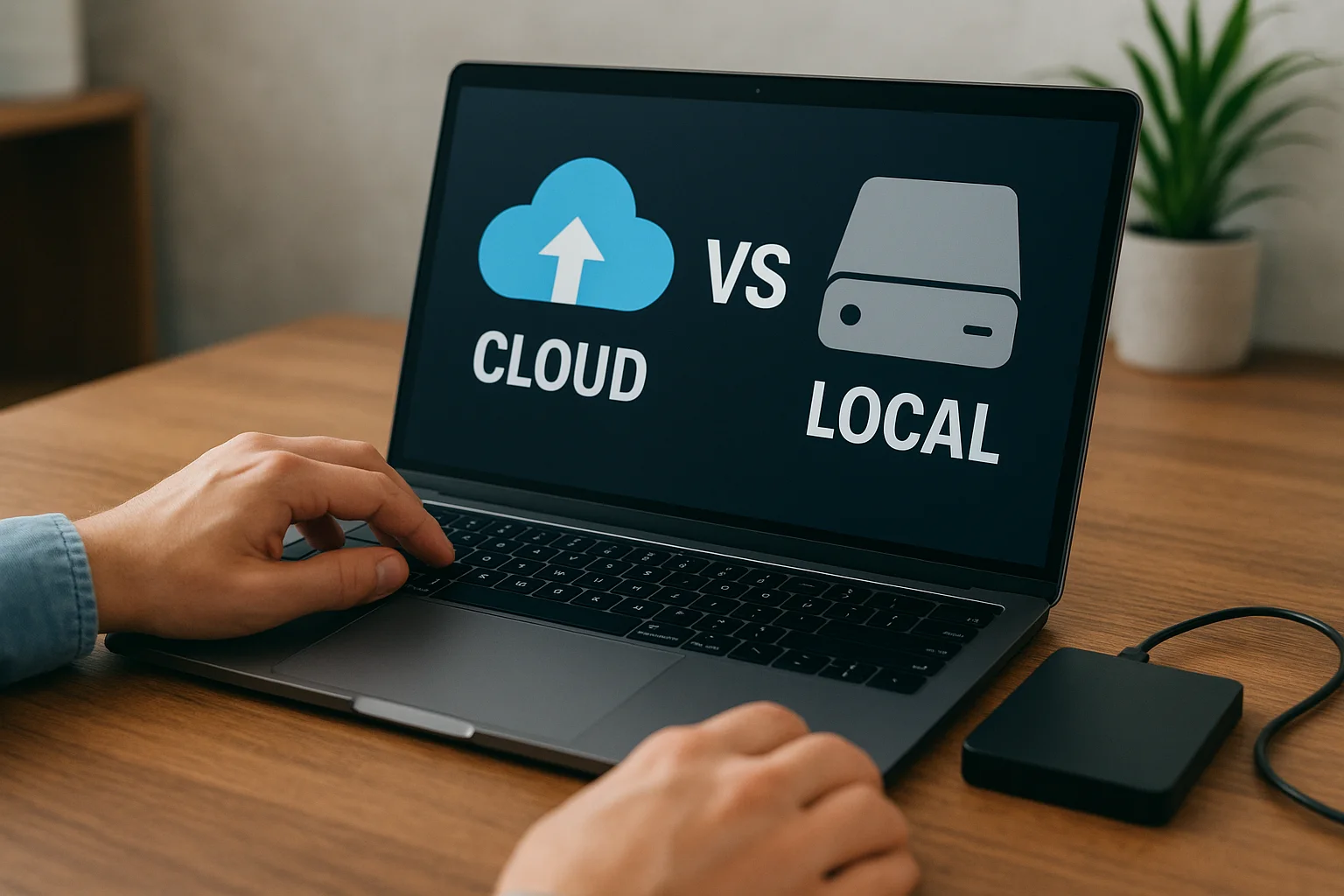
Projected Storage Costs in 2026: Market Trends and Price Drivers
Cloud and local storage costs in 2026 will be shaped by two competing forces: rising hardware component prices and continued cloud-scale efficiency and competition. On the hardware side, memory and NAND supply constraints driven by increased demand for AI and enterprise SSDs have pushed contract prices up substantially, which raises the cost base for on-premises storage appliances and enterprise SSD deployments. At the same time, major cloud providers continue to adjust pricing and introduce new, lower-cost storage classes and features that can materially change the monthly bill for certain workloads. Expect volatility in raw media prices and gradual, selective price reductions or new low-cost tiers from hyperscalers that target cold or vectorized data workloads.
Practically, this means organizations should not assume a steady downward trend for hardware unit costs in 2026; instead plan for periodic spikes and tightened supply for specific components (enterprise SSDs, high-capacity NAND) while factoring in provider-specific discounts, regional pricing, and new storage classes from cloud providers that can reduce per-GB charges for well-architected workflows. Scenario planning (best/worst/most-likely) is essential to make procurement decisions that remain cost-effective across price swings.
Cloud Storage Economics: Subscription Models, Scalability, and Hidden Fees
Cloud storage pricing is rarely just "per GB per month." Modern cloud bills combine storage capacity fees with requests (API operations), ingress/egress and inter-region transfer costs, retrieval fees for infrequent-access tiers, and optional features such as replication, lifecycle automation, or vector search acceleration. Cloud advantages include near-zero upfront capital expense, rapid scalability, and ability to shift costs to match usage patterns; disadvantages include variable bandwidth costs and many small line items that add up quickly without FinOps discipline.
Below is a short checklist to evaluate cloud economics for a given workload. This list helps you avoid common surprises and gives practical levers you can act on immediately.
- Map monthly storage volume and access patterns (hot vs cold vs archival).
- Estimate request rates and typical object sizes to project API and retrieval fees.
- Identify multi-region or cross-account transfer flows to include egress costs.
- Consider storage classes (standard, intelligent tiering, glacier-like) and expected lifecycle transitions.
- Quantify optional services (CDN, versioning, replication) and test at scale if possible.
Large providers are introducing specialized low-cost options tailored for AI vector workloads or one-zone storage that can reduce storage fees by a large percentage for tolerant data sets. These product-level changes can change the calculus for moving large datasets to cloud storage in 2026. Always check for targeted promotions and new storage classes before signing long-term contracts.
On-Premises Storage: Hardware Investments, Depreciation, and Maintenance Costs
Choosing on-premises storage means trading recurring cloud subscriptions for capital expenditure, physical space, power, cooling, and ongoing maintenance. Key cost categories include acquisition (servers, controllers, drives), networking, facility overhead, software and support contracts, and personnel for operations. Because hardware price behavior in 2025–2026 has shown upward pressure for NAND and enterprise SSDs, acquisition budgets should reflect higher-than-expected unit prices and potentially longer lead times for procurement.
When modeling on-premises costs, spread capital expenditures over a realistic depreciation window (commonly 3 to 5 years for storage arrays and 5 to 7 years for chassis and networking) and include total power and cooling (PUE-adjusted), rack space, spare parts, and support SLAs. Staff costs are often undercounted: include salaries for sysadmins, storage engineers, and the incremental cost of security and compliance activities that a cloud provider may absorb in their platform fees.
Cost Implications of Security, Compliance, and Data Governance
Security and compliance are cost-drivers that sit above raw storage economics. Cloud providers invest heavily in certifications (SOC, ISO, GDPR support, etc.) and offer managed encryption, key management, and audit trails as part of the platform; these reduce the burden and cost of compliance for many organizations. Conversely, storing sensitive data on-premises requires investment in physical security, key management, logging and SIEM integration, and regular compliance audits.
Use the following short comparison to decide where risk and cost sit for your project. This is a qualitative checklist to guide procurement and architecture decisions.
- Cloud: lower upfront compliance lift, but watch for additional audit log storage costs and egress for forensic analysis.
- On-premises: direct control of keys and audit data, but higher operational and certification costs.
- Hybrid: can isolate regulated data on-premises while keeping analytics and non-sensitive data in cloud; however, hybrid complexity brings integration costs.
A practical action: conduct a focused compliance cost estimate for the most sensitive 10% of your data and compare it to the marginal cost of storing that same 10% on a compliant cloud tier. Often the cloud option is cheaper when you factor staff time, audit frequency, and certification expenses.
Hybrid Approaches: Balancing Performance, Flexibility, and Total Cost of Ownership
Hybrid architectures that mix cloud and on-premises storage are the dominant practical outcome for most enterprises in 2026. They allow teams to place latency-sensitive or regulated data on local storage, while offloading scale, backups, and analytics to cloud providers. The financial benefit of hybrid is the ability to optimize each workload against the cheapest suitable storage plane while keeping operational flexibility.
To make hybrid decisions actionable, use this comparison table that synthesizes cost and operational trade-offs between cloud and on-prem. The numbers are illustrative categories rather than fixed prices; adapt them to your region and vendor quotes.
| Cost Category | Cloud (typical) | On-Premises (typical) |
|---|---|---|
| Upfront CapEx | Low to none (subscription) | High (hardware, site prep) |
| Ongoing OpEx | Predictable but variable by usage (storage + requests + egress) | Maintenance, power, staff, spare parts |
| Scalability | Elastic, pay-as-you-grow | Capacity planning required, slower scale |
| Latency / Performance | Varies; edge/CDN for low latency, otherwise network-bound | Consistently low latency for local workloads |
| Compliance & Control | Strong provider controls and certifications; less physical control | Full control, higher own-cost for certifications |
Actionable steps for a hybrid TCO approach:
- Classify your data by access pattern, sensitivity, and required performance.
- Estimate monthly cloud costs for each class using provider calculators and add realistic egress scenarios.
- Estimate on-prem total cost over 3–5 years including staff, power, and replacement cycles.
- Choose a policy: hot data on-prem, warm data in cloud nearline tiers, archive to cold cloud tiers or tape as appropriate.
- Re-evaluate quarterly to capture changes in hardware pricing or cloud product announcements.
Because cloud market dynamics and hardware supply are both shifting in 2025–2026, the most robust strategy is one that remains adaptable: measure frequently, optimize policies, and use tiered placement rather than betting everything on a single model.